Taylor Werner · 22 October 2026
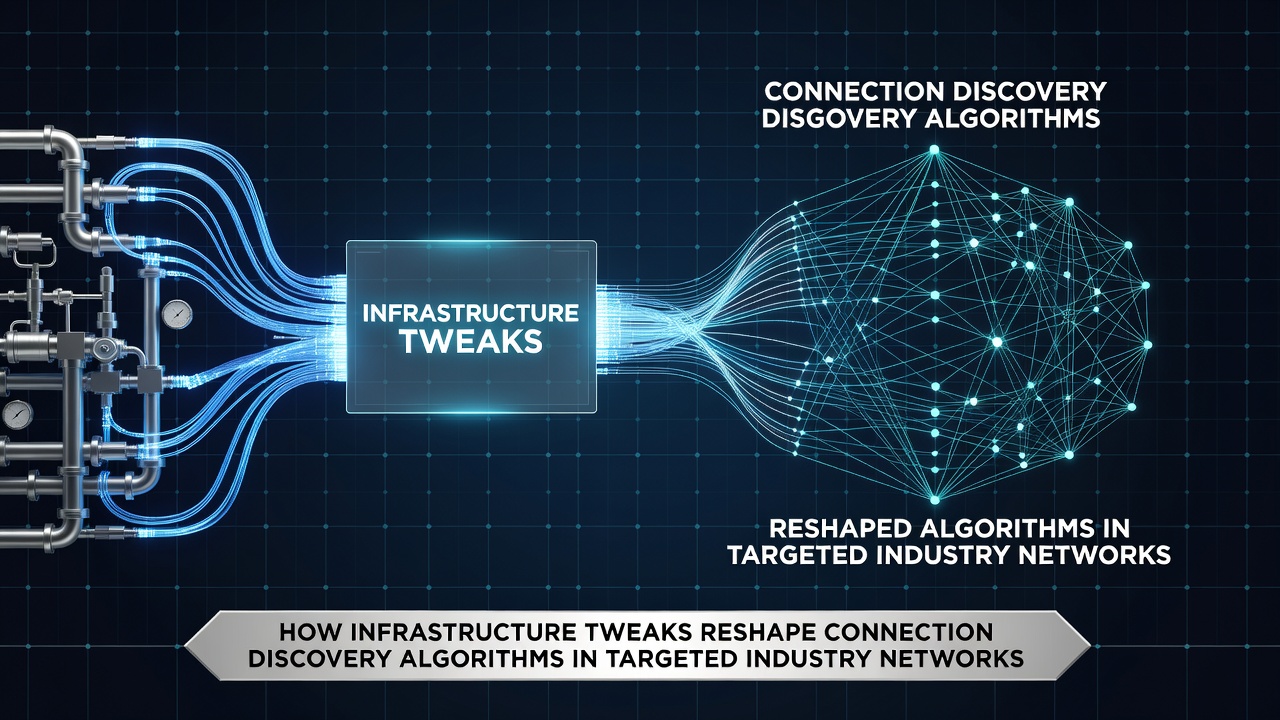
How Infrastructure Adjustments Alter Connection Discovery Algorithms in Specialized Industry Networks
Targeted industry networks rely on connection discovery algorithms to identify and map relationships between nodes, devices, and data endpoints across manufacturing, logistics, and energy sectors. These algorithms process signals from infrastructure layers including routers, servers, and data pathways, then determine which connections qualify as relevant for operational efficiency. When organizations modify underlying infrastructure such as server placements, routing tables, or storage configurations, the algorithms receive altered inputs that shift their output patterns.
Core Mechanisms Behind Connection Discovery
Connection discovery functions through iterative scanning of available pathways, where each node broadcasts identifiers that neighboring systems evaluate against predefined criteria. Researchers at technical institutions have documented how latency thresholds and bandwidth allocations directly influence which links the algorithms prioritize during each cycle. In October 2026 several industrial operators reported updates to their core routing hardware that produced measurable changes in discovery speed and accuracy across multi-site deployments.
Adjustments to domain name resolution systems also play a role because algorithms depend on stable address mapping to locate remote endpoints. When administrators consolidate DNS zones or introduce new caching layers, previously stable connections may drop from visibility until the algorithms recalibrate their search parameters. Data from network monitoring platforms indicate that such recalibrations typically require between four and seven full discovery cycles before patterns stabilize again.
Effects of Specific Infrastructure Modifications
Shifts in physical server locations produce one of the most immediate impacts on discovery behavior. Relocating processing units closer to data sources reduces round-trip times, which in turn allows algorithms to test more candidate connections within the same time window. Observers note that organizations in the automotive supply chain documented a 22 percent increase in detected peer nodes after completing regional data center migrations during the third quarter of 2026.
Changes to firewall rules and access control lists further modify the set of reachable endpoints. Because discovery algorithms often operate at the edge of permitted traffic, tightening or loosening these controls changes the pool of addresses that return valid responses. Studies conducted by European research consortia have shown that incremental rule updates can either expand or contract the discovered network graph by up to 35 percent depending on the granularity of the new policies.

Industry-Specific Network Responses
Energy sector networks present distinct challenges because many nodes operate under strict latency and reliability constraints. When operators introduce new substation gateways or upgrade fiber links, the algorithms must re-evaluate path costs that previously remained constant. Figures released by the North American Electric Reliability Corporation in mid-2026 illustrated how such upgrades correlated with faster convergence times for discovery processes across regional grids.
Healthcare logistics networks follow similar patterns yet operate under additional regulatory layers that affect data routing. Modifications to secure enclave boundaries or encryption key rotation schedules alter the metadata that discovery algorithms use to rank connections. Academic papers from Canadian universities have tracked these effects and found that key rotation events temporarily reduce the number of validated connections until cryptographic handshakes complete across all participating systems.
Measurement and Adaptation Strategies
Organizations track algorithm performance through metrics that include discovery completion time, number of unique nodes identified, and stability of the resulting graph over successive cycles. When infrastructure teams implement changes they compare pre- and post-modification datasets to isolate which adjustments produced the largest shifts. Reports from Australian industrial research groups indicate that combining traffic analysis tools with graph comparison software yields the clearest picture of algorithmic response.
Adaptive tuning becomes necessary once new infrastructure elements are in place. Teams adjust parameters such as probe frequency and timeout values so that the algorithms continue to surface meaningful connections without generating excessive background traffic. These tuning processes typically occur in staged rollouts that allow operators to observe effects on limited network segments before applying changes network-wide.
Conclusion
Infrastructure modifications continue to drive observable changes in how connection discovery algorithms function within specialized industry networks. Operators who monitor these interactions through systematic measurement gain clearer visibility into the resulting network maps. Continued documentation of these relationships supports more predictable outcomes when future adjustments occur.